Defensible space
Defensible Space in California: What Homeowners Should Know
Updated August 25, 2026
Defensible space is the managed area between a structure and surrounding vegetation or wildland. California guidance organizes that work into areas beginning immediately next to buildings and extending outward. The useful scope for a particular property still depends on slope, plants, structures, property lines, access, and current local rules.
Start with the first five feet around structures
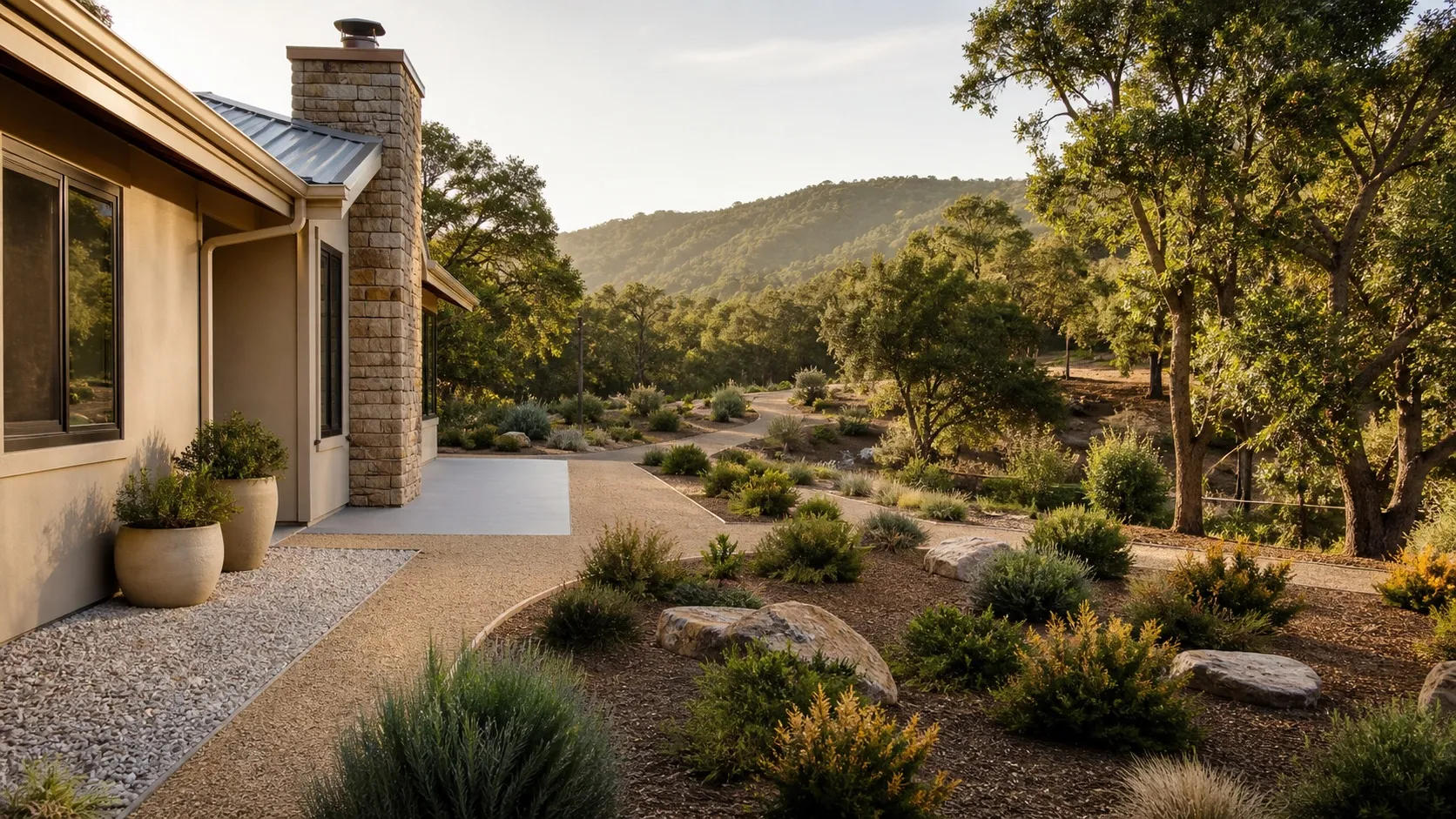
CAL FIRE identifies the first five feet from buildings, structures, and decks as the most important area for reducing the chance that wind-blown embers ignite nearby material. Common discussion points include dead vegetation and debris, combustible mulch, stored items, firewood, outdoor furnishings, bins, and combustible fencing attached to the home.
Treat Zone 0 information as preparation guidance, not a universal code interpretation. Rulemaking and local implementation can change, and local agencies may apply more specific standards. Confirm what currently applies to your address before planning regulated work.
Zone 1: manage the area within 30 feet
State guidance for the area within 30 feet emphasizes removing dead or dry vegetation and interrupting continuous fuel between plants, trees, structures, and combustible objects. Some counties use different distances or stricter standards, so the local fire authority should remain part of the planning process.
Zone 2: reduce potential fuel farther out
Between 30 and 100 feet—or to the property line—work may involve grasses, fallen material, shrub and tree spacing, wood piles, outbuildings, and access around propane equipment. Slope and vegetation height influence useful spacing, and a neighbor’s property is outside the area a homeowner can direct.
Separate tree work from general clearing
Tree pruning or removal can require different skill, equipment, licensing, and local review than mowing or brush clearance. Ask who will perform tree work, how targets were selected, what will be hauled or chipped, and how remaining trees and understory vegetation will be treated.
Plan for recurring vegetation maintenance
A one-time project does not address future growth, new dead material, wind-blown debris, or seasonal grasses. Ask what conditions the proposed work is meant to change now and what maintenance interval the provider recommends afterward.
Include stored materials and movable items
Firewood, lumber, furniture, waste containers, and other combustible storage can concentrate fuel near a structure. A useful plan identifies what can be moved, what must remain accessible, and which recommendations are temporary, seasonal, or permanent.
Look at fencing and structure connections
Combustible fencing or gates connected to a building can create a continuous path toward the structure. Ask whether the scope includes debris at fence lines, attached sections, gates, and the transition closest to buildings—without assuming that every fence needs full replacement.
Keep utility work within the right professional scope
Vegetation and stored material around propane, electrical, and other utility equipment may need attention, but fuel and electrical systems should not be altered as part of general vegetation work. Confirm clearance, access, and equipment questions with the utility or appropriately licensed professional.
Ask for a property-specific written scope
Comparable proposals should identify the structures and distances included, vegetation or materials addressed, disposal method, exclusions, access constraints, and whether the recommendation is one-time work or recurring maintenance.
- Which structures, zones, and property areas are included?
- Are pruning, tree removal, mowing, hauling, chipping, or stump work included?
- How will green waste, chips, and debris be handled?
- Are slopes, gates, protected trees, utilities, or property lines limiting the work?
- Which local permit, inspection, disposal, or fire-authority questions should the homeowner confirm?
Confirm current local requirements
California’s statewide guidance is a starting point. Counties, fire protection districts, homeowner associations, and local planning or building departments may have different requirements and processes.
El Dorado County and San Diego County homeowners can use the local authority links below alongside CAL FIRE materials. These sources provide context but do not replace an official inspection or jurisdiction-specific direction.
Official sources
These public sources support the general homeowner information above. Confirm current local requirements for your specific project.
CAL FIRE: Defensible Space ↗California Board of Forestry and Fire Protection: Defensible Space Zones ↗El Dorado County: What Is Defensible Space? ↗San Diego County: Defensible Space ↗