ROOFING
Roof covering
The roof has a large exposed surface and can collect wind-blown embers and debris.
What homeowners can observe
Accumulated leaves or needles, damaged covering, and gaps at roof edges or intersections.
A VISUAL HOMEOWNER GUIDE
Wildfire readiness is not a single product or project. Explore the structure and the space around it, save the areas you want to discuss, and find relevant local professionals.
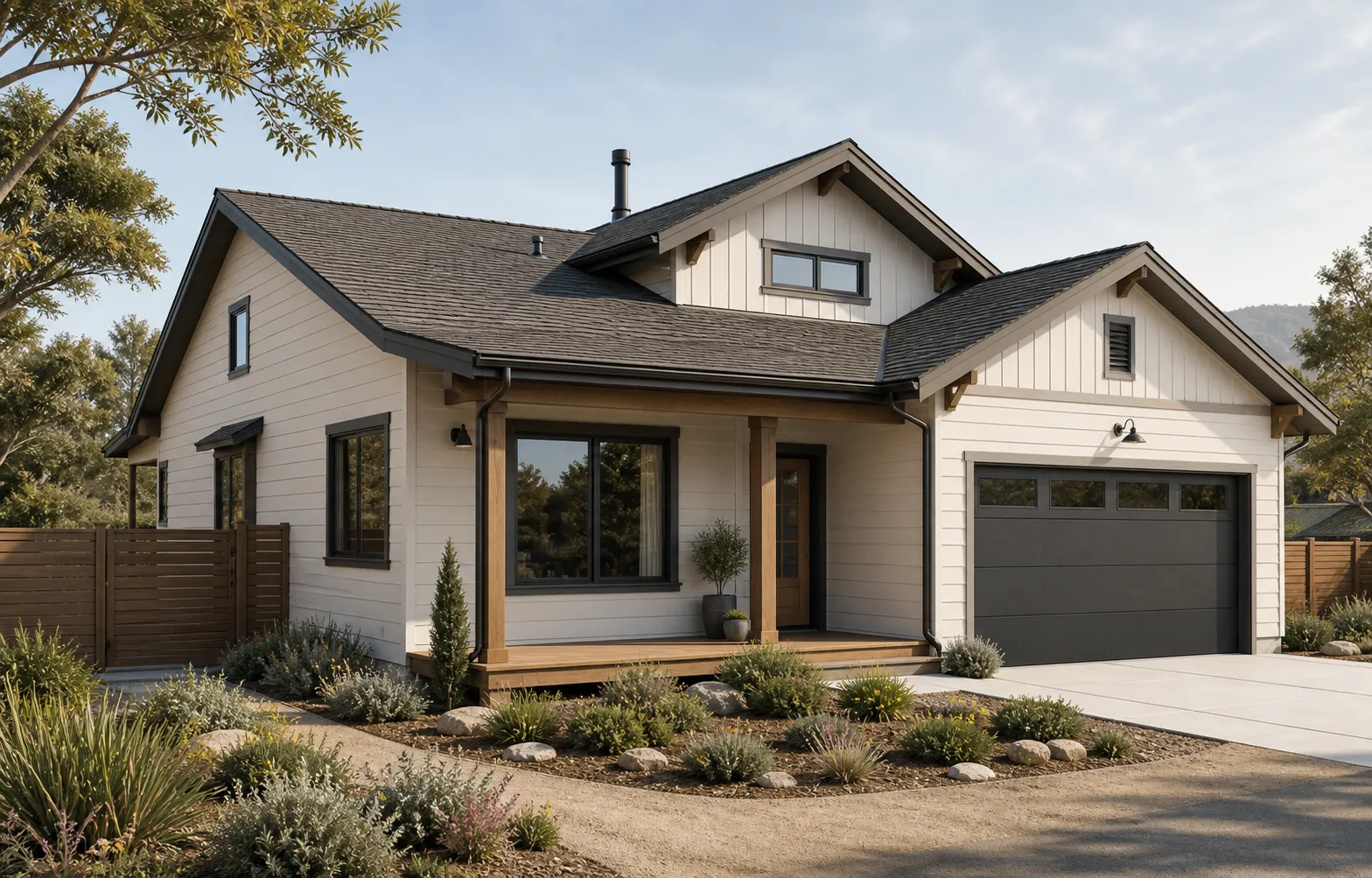
Hover, focus, or tap a numbered area to learn what to observe and when professional help may be useful.
EVERY AREA, IN PLAIN LANGUAGE
All core information in the visual is also available here for search, assistive technology, and easy reference.
ROOFING
The roof has a large exposed surface and can collect wind-blown embers and debris.
Accumulated leaves or needles, damaged covering, and gaps at roof edges or intersections.
ROOFING
Skylights, solar equipment, chimneys, and other penetrations can create places where debris accumulates or gaps develop.
Debris beneath or beside attachments, open gaps, exposed framing, and damaged flashing.
HOME HARDENING
Combustible debris in gutters can be exposed to embers and can place heat next to the roof edge.
Leaves, needles, damaged sections, gaps, and vegetation overhanging the roofline.
EMBER-RESISTANT VENTS
Wind-driven embers can enter openings and ignite combustible material inside attics, crawl spaces, or wall cavities.
Vent locations, missing or damaged screening, visible gaps, corrosion, and nearby debris.
HOME HARDENING
Open or damaged eaves can expose vulnerable cavities; debris can also collect at roof-to-wall edges.
Open eaves, cracked or missing soffit material, gaps, and nests or debris.
HOME HARDENING
Gaps, combustible materials, and places where debris collects can increase vulnerability at the wall surface.
Cracks, missing boards, gaps at joints, exposed sheathing, and combustible items against walls.
HOME HARDENING
Heat can damage glazing or frames and may expose the interior to fire or embers.
Single-pane units, damaged seals or frames, missing screens, and combustible vegetation or furnishings immediately outside.
HOME HARDENING
Gaps around doors can admit embers, while nearby combustible material can expose the opening to heat.
Visible daylight, worn weatherstripping, damaged thresholds, and combustible storage near the doorway.
HOME HARDENING
Large garage openings can have perimeter gaps, and garages often contain combustible items.
Gaps at the sides or bottom, damaged seals, and combustible material stored close to the door.
HOME HARDENING
Debris and combustible items on, beside, or beneath an attached deck can provide a path toward the structure.
Leaves in gaps, material stored underneath, damaged boards, open undersides, and vegetation touching the deck.
HOME HARDENING
A combustible fence connected directly to a building can carry fire toward the structure.
Combustible fence sections or gates touching the home and debris collected along the fence line.
HOME HARDENING
Planters, furniture, trellises, stored material, and similar items can add fuel beside the building.
Combustible items touching walls, under eaves, on decks, or near windows and doors.
DEFENSIBLE SPACE
CAL FIRE identifies the first five feet from buildings, structures, and decks as the most important area for reducing the chance that embers ignite nearby material.
Dead vegetation, combustible mulch, leaves, firewood, bins, furniture, and combustible fencing or gates connected to the home.
DEFENSIBLE SPACE
This area is managed to reduce fuels and interrupt paths toward the home.
Dead plants, leaves, dry grasses, dense shrubs, low branches, and vegetation touching structures.
DEFENSIBLE SPACE
Reducing and spacing potential fuels farther from the home can help slow fire and support safer conditions for response.
Tall grasses, dead vegetation, dense shrubs, crowded trees, and debris piles. Property lines may limit the distance you control.
TREE SERVICES
Branches and closely spaced crowns can contribute to vertical or horizontal fire spread.
Dead limbs, branches near roofs or chimneys, crowded crowns, and ladder-fuel connections from shrubs to trees.
VEGETATION MANAGEMENT
Dead, dry, or continuous vegetation can carry fire across a property and toward structures.
Dry grasses, dead material inside shrubs, plants beneath trees, and uninterrupted vegetation beds.
DEFENSIBLE SPACE
Firewood, lumber, and other combustible storage can add concentrated fuel near structures.
Stacks close to the home or deck, material beneath trees, and debris accumulating around storage.
HOME HARDENING
Sheds and other structures can contain combustible material and may expose the home if they are close by.
Roof or gutter debris, open vents, wall gaps, attached fencing, stored fuel, and vegetation around the structure.
HOME HARDENING
Combustible fencing can carry fire across a property, especially where it connects to a structure.
Continuous combustible sections, dead vegetation along the line, and direct connections to buildings.
DEFENSIBLE SPACE
Utility and fuel-storage areas need clear access and vegetation management; requirements can vary by equipment and jurisdiction.
Dry vegetation, stored materials, blocked access, or damaged components around equipment. Do not alter fuel or electrical systems yourself.
CAL FIRE describes defensible-space zones and home-hardening considerations, while counties and local fire authorities may apply stricter or more specific standards. Confirm current requirements for your address and project before starting work. Wildfire Navigator does not interpret code, determine compliance, or guarantee safety, insurance eligibility, or discounts.
Official guidance reviewed August 12, 2026: CAL FIRE Home Hardening ↗ and CAL FIRE Defensible Space ↗.