Hiring a contractor
How to compare bids for wildfire work on your California home
Updated November 23, 2026
One estimate says “upgrade attic vents.” Another names a vent model and includes patching and paint. The totals are easy to compare. The harder question is what your house will look like when each crew leaves. Here’s how to get that answer in writing while you can still change the plan.
Give each contractor the same starting point
Write down the concern, the part of the property involved, and what prompted the call. An assessor’s marked photo or a photo taken from the ground can help both contractors recognize the same opening. If you don’t know what an opening serves, label it by location (“over the garage door”) and let the contractor identify it on site.
Try this first call. “I’m in [community]. My assessment flagged vents under the eaves. Do you visit this area and install vent upgrades on existing homes? Is there a fee for the visit? Could you list the openings you’d work on, the product you’d use, and what the price covers? What would you need to see before giving me a firm bid?”
California’s Contractors State License Board (CSLB) recommends getting at least three written bids for the same work. If one contractor spots something the others missed, give everyone the revised description and ask for the cost of the extra work on its own line.
Read two vent bids side by side
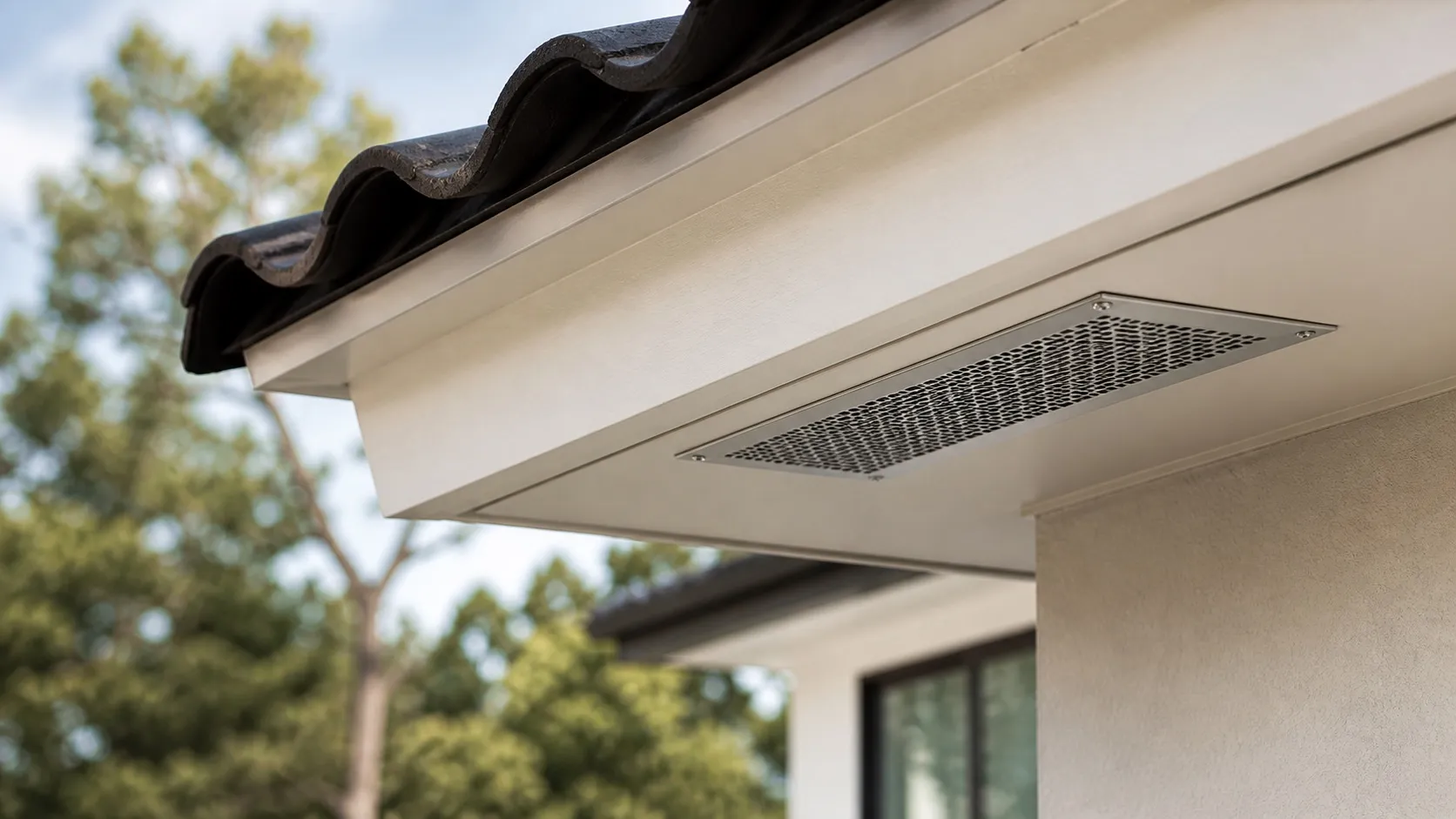
Imagine a San Diego County homeowner whose assessment identifies six attic vents under the eaves. In this example, Bid A offers to add mesh to four accessible vents. Bid B proposes replacing six vents with a named ember-resistant model and repainting the trim. The homeowner could spend less with A and still have two openings to address. B includes finish work the homeowner might already have arranged with a painter.
Ask A which four openings it counted, what mesh it would use, and how it would handle the other two. Ask B for its model and listing number, which openings it fits, and a price with the repainting shown separately. Ask both bidders how they’ll check that the attic will still get the airflow it needs. Even with the same six openings on paper, mesh and replacement vents are different proposals. Have each contractor explain why its approach fits this house.
CAL FIRE advises consulting the local building official about ventilation before changing attic or underfloor vents. For a product described as State Fire Marshal listed, look up that exact model in the state Building Materials Listing program. In unincorporated San Diego County, the County Building Services Division handles building permits. Inside a city, start with the city building department. Give the office the actual scope so it can tell you which requirements apply.
Copy this worksheet once for each bid
Fill it out using the written estimate. Mark a missing answer “open.” An empty line for permits, disposal, or patching can become a bill later. This also works for defensible-space work: list the area, whether cuttings stay on site, and who hauls them away.
- Bidder and date ______ License number ______ Who will actually perform the work? ______
- Location, quantity, and work included ______ Items left out or priced separately ______
- Material or model ______ Listing or installation instructions, if relevant ______
- Access, removal, repair, cleanup, and disposal included ______
- Permit or inspection questions ______ Who will check, apply, and pay? ______
- Written total ______ Amounts still estimated ______ Optional work ______
- Start and finish window ______ Payment milestones ______ Written warranty and contact for problems ______
- The one answer I still need before deciding ______
Check who stands behind the bid
Look up the contractor by license number in CSLB’s License Check. Match the business name to the bid, review the current status and classification, and ask CSLB if you’re unsure the license covers the proposed trade. Ask the contractor for insurance information you can verify and a reference from a recent job with similar work. A useful question for that homeowner is “What changed between the estimate and the final bill, and how did you find out?”
Carry the agreed details from the worksheet into the contract. Look for the same quantities, model, exclusions, permit responsibilities, payment milestones, and cleanup you used to choose the bid. CSLB’s contract guidance calls for both parties to sign a written change order before changed work proceeds. If removing a vent reveals damaged wood, for example, ask to see the revised scope, cost, and effect on timing before authorizing that repair.
When the job is done, keep the signed scope, any changes, the final invoice, model information, and any permit or inspection records together. Ask the installer to show you which openings were completed and how to maintain the installed product. Those records will also help the next person who services the eaves or paints the house.
Official sources
These public sources support the general homeowner information above. Confirm current local requirements for your specific project.
CSLB · Choosing a licensed contractor and comparing bids ↗CSLB · Check a contractor’s license ↗CSLB · Home improvement contracts and written changes ↗CAL FIRE · Home hardening guidance for vents ↗Office of the State Fire Marshal · Building Materials Listing search ↗County of San Diego · Building Services Division ↗